The specified file temporary://filefdtKJz could not be copied, because the destination directory is not properly configured. This may be caused by a problem with file or directory permissions. More information is available in the system log.
The specified file temporary://file7fkaQN could not be copied, because the destination directory is not properly configured. This may be caused by a problem with file or directory permissions. More information is available in the system log.
The specified file temporary://fileAlw0m2 could not be copied, because the destination directory is not properly configured. This may be caused by a problem with file or directory permissions. More information is available in the system log.
The specified file temporary://file9ECnWg could not be copied, because the destination directory is not properly configured. This may be caused by a problem with file or directory permissions. More information is available in the system log.
The specified file temporary://filejqvdIv could not be copied, because the destination directory is not properly configured. This may be caused by a problem with file or directory permissions. More information is available in the system log.
Unable to create CTools CSS cache directory. Check the permissions on your files directory.
Você está na versão anterior do website do ISA
Atenção
Essa é a versão antiga do site do ISA que ficou no ar até março de 2022. As informações institucionais aqui contidas podem estar desatualizadas. Acesse https://www.socioambiental.org para a versão atual.
Prêmio Equatorial, concedido a cada dois anos, teve mais de 800 candidaturas; segundo comitê da ONU, iniciativa produtiva "recupera terras tradicionais e desenvolve modelo empresarial inovador"
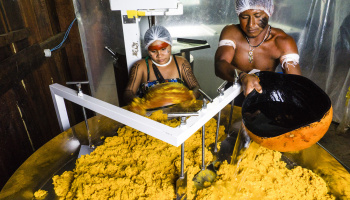
Terra Indígena Wawi (MT), degradada pela ação de fazendeiros no passado, vem sendo recuperada com o plantio de pequizais; produto é reconhecido pelo Selo Origens Brasil e pelo Slow Food Internacional
Orgânico e produzido de forma comunitária na aldeia, é essencial na cultura e alimentação dos Kĩsêdjê. É plantado também para reflorestar áreas desmatadas da Amazônia